
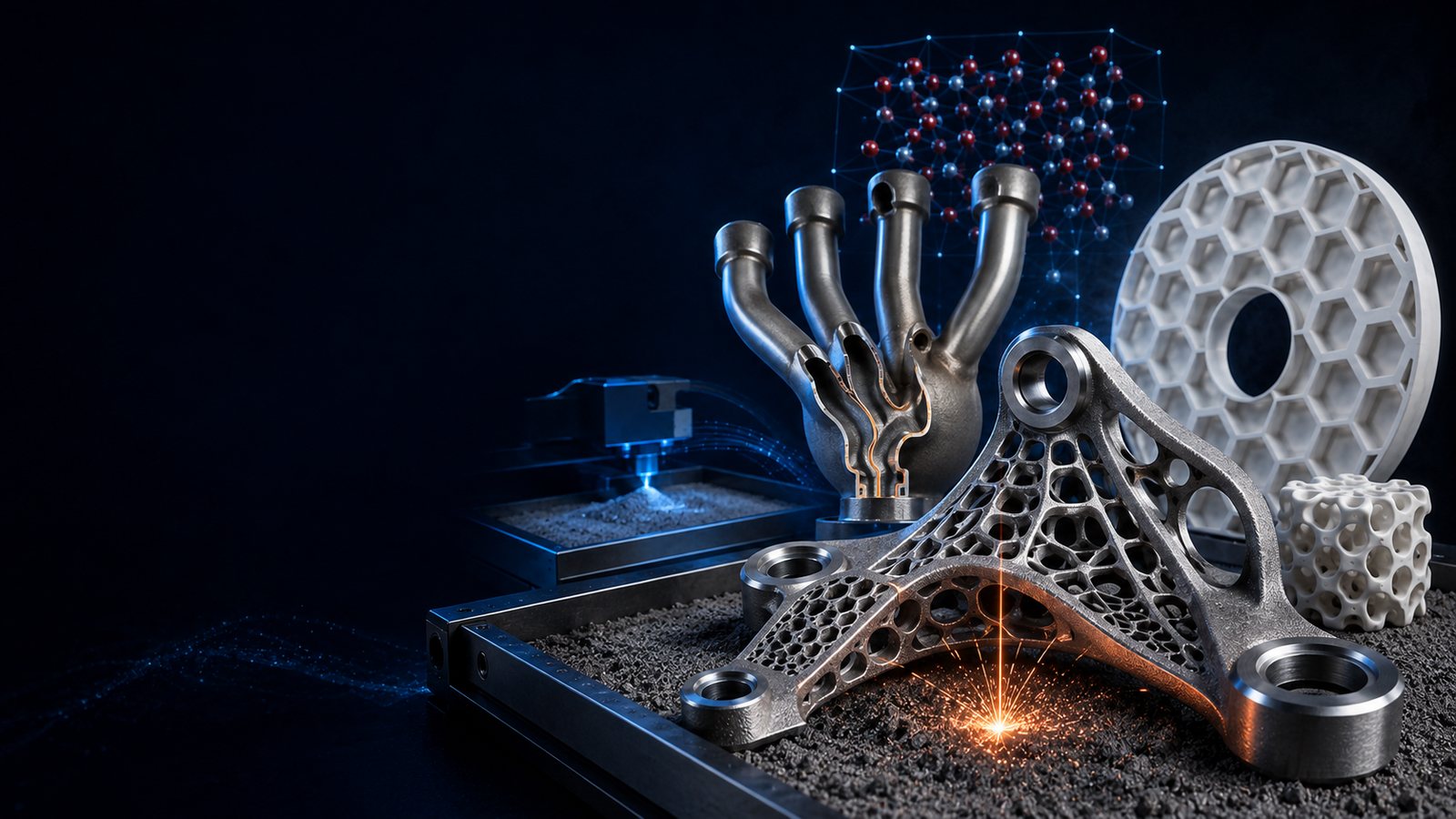
Additive Manufacturing
New design freedom, weight reduction and conformal channels: maximum latitude on the part itself.
See the applications →From idea to industrialisation: we steer innovation, technologies and new processes towards results you can measure on the shop floor.
Companies that truly innovate rarely have a purely technical problem. They have a problem of method, of market, of people and of process — almost always all at once.
Assessment, roadmap, incentives, technology scouting and industrialisation: a single hand guiding the work from the problem to production.
Explore this area →Sales structure, industrial marketing and workflow automation: requests for quotation, quoting, CRM and follow-up with AI agents.
Explore this area →Vertical programmes built on real cases for management, engineering, production, quality and sales teams.
See the catalogue →Additive, machining and casting compared on the part, the volumes and the total cost.
Open the overview →New design freedom, weight reduction and conformal channels: maximum latitude on the part itself.
See the applications →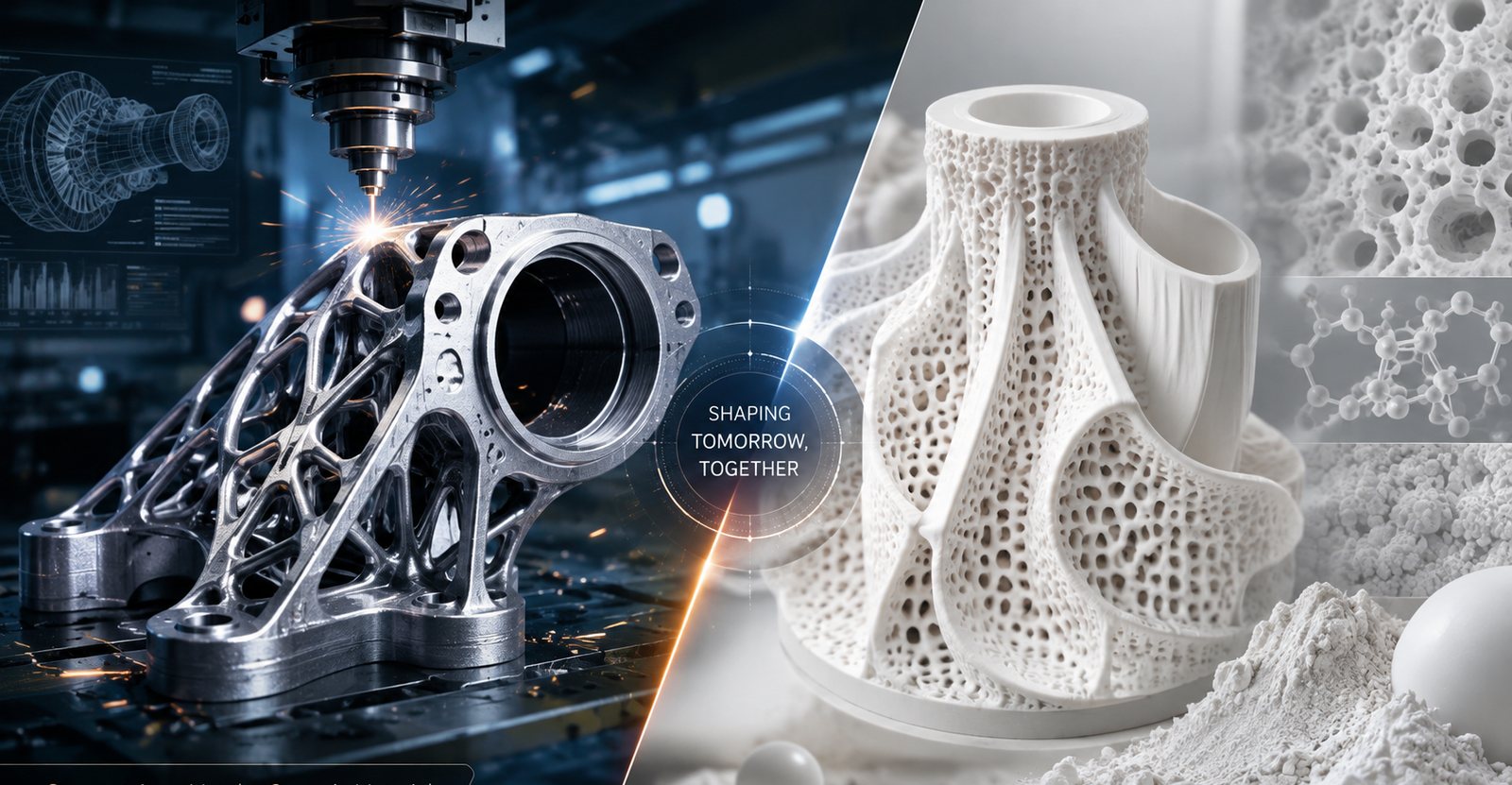
Metal, technical ceramics and high-performance polymers: the material choice drives the process, not the other way round.
See the materials →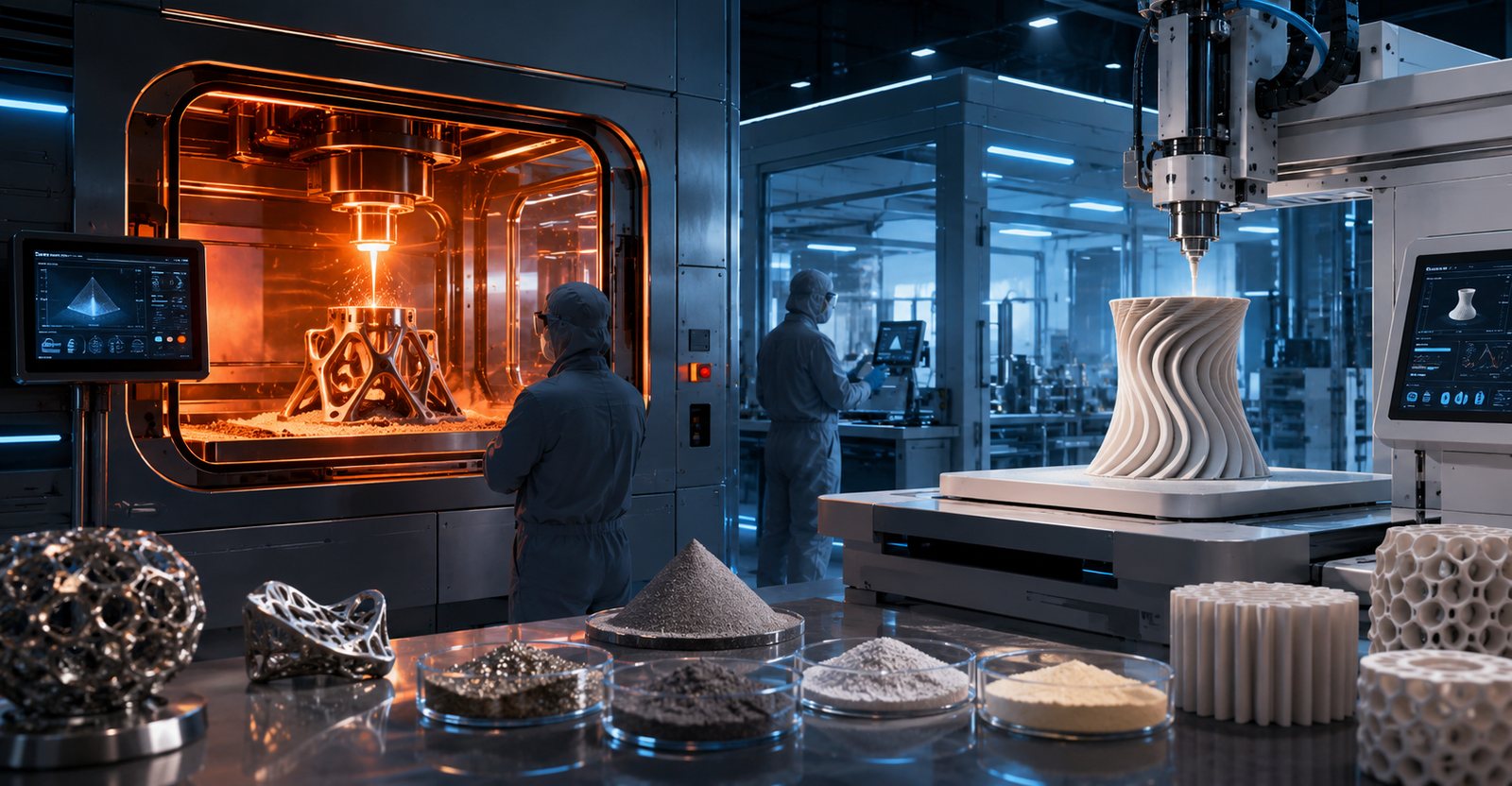
From the one-off part to the repeatable batch: parameters, process qualification, powder management and quality control.
How it is qualified →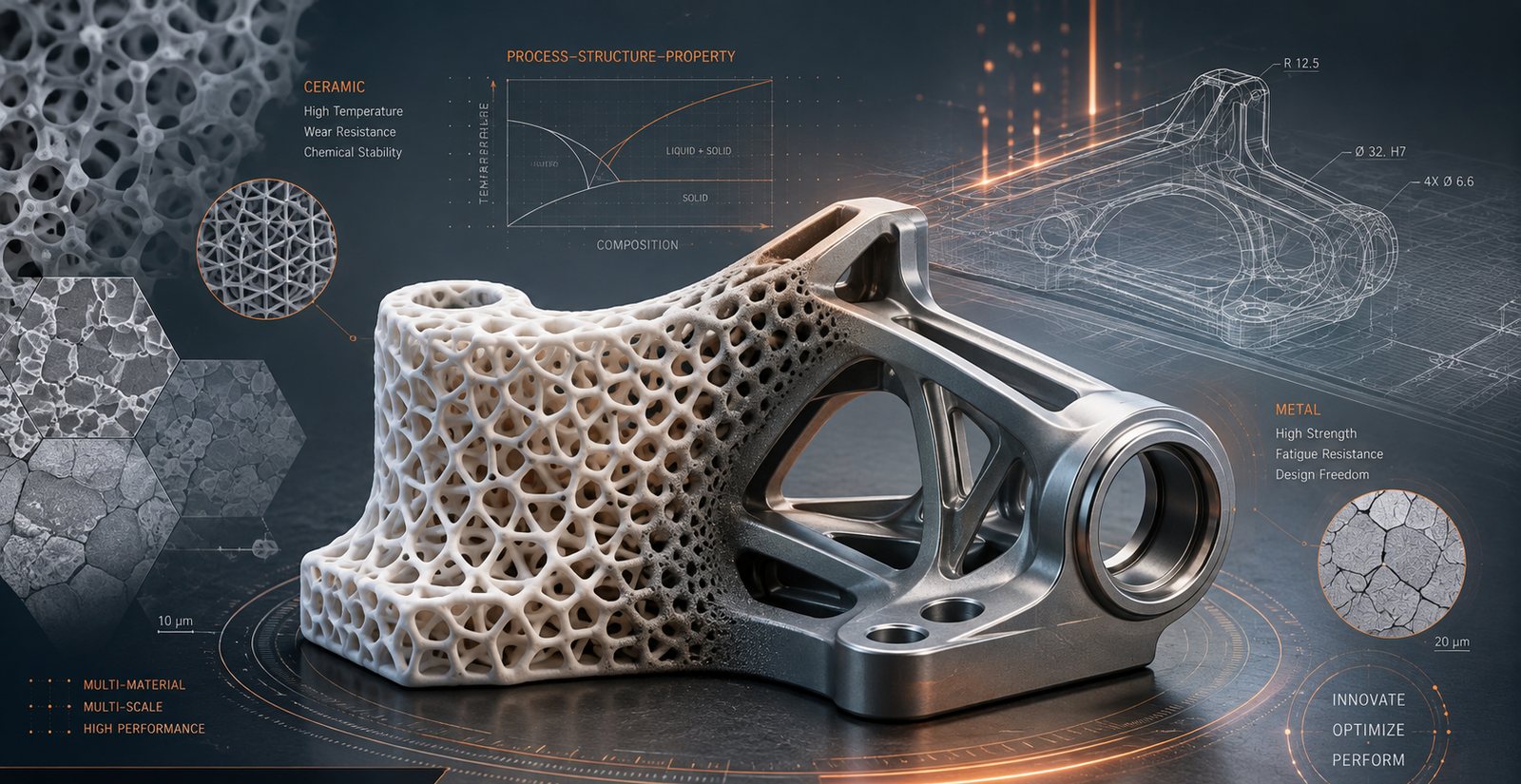
Process–structure–property relationships, tolerances, shrinkage and heat treatment: the numbers come before the machine.
See the method →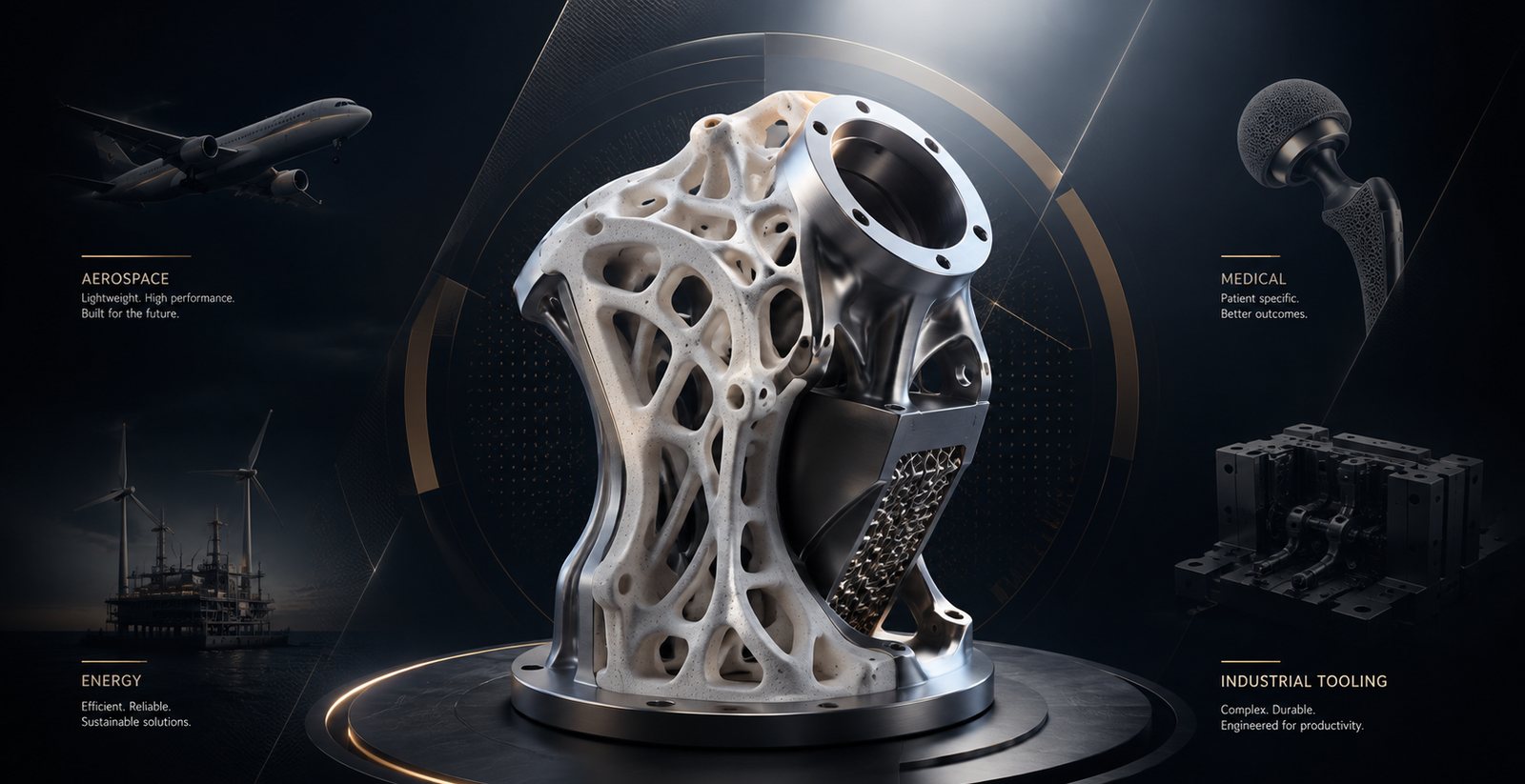
Aerospace, medical, energy and industrial tooling: where additive generates value you can document.
See the sectors →
Critical components for extreme environments, where qualification, traceability and repeatability are not negotiable.
See the environments →An innovation partner with technical depth, industrial perspective and an approach that ends with parts in your hand, not with a slide deck.
Our story →Real projects and industrial know-how, not textbook theory.
From strategy to production, with a single point of contact.
Industrial partners for trials, production and qualification.
Part cost, lead time and return on investment.
No invented percentages: what we actually bring in, measured in skills and coverage.
Bonora Technologies Srl is a consulting firm based in Ferrara, Italy, that supports manufacturing companies on four fronts: technological innovation, commercial development, process automation with artificial intelligence, and technical training.
It is led by Filippo Bonora, innovation manager listed on Unioncamere's national register of innovation managers, chairman and CEO of TAMAU System and founder of 3D Techforged.
The specialisation is metal additive manufacturing and the production technologies it competes with: binder jetting, LPBF/SLM, CNC, investment casting, die casting, MIM, vacuum casting and printing of polymers and technical ceramics.
We work throughout Italy, in Italian and English, for clients ranging from the small machine shop to the structured industrial group.
Short answers to the technical and commercial questions that come up in every first meeting.
An innovation manager turns a technological ambition into an executable plan: they analyse the current state of product, process and skills, build a roadmap with timings, costs and owners, identify the available sources of funding, and follow execution through to production. In an SME this is often the missing role between management, engineering and the shop floor.
The routes most used by Italian manufacturers are the tax credit for research, development and innovation, the measures supporting the digital and energy transition, the Nuova Sabatini scheme for capital equipment, and chamber of commerce and regional calls. Each measure has its own requirements, caps and reporting obligations, and these change over time: eligibility must be checked against the specific project before committing resources.
It pays off when the geometry is complex, volumes are low to medium, the part can be lightened or consolidated from several components into one, or when internal channels are needed that machining cannot produce. It does not pay off on simple geometries in large series, where die casting, MIM or bar machining remain cheaper. The answer comes from comparing the full part cost — material, machine, post-processing and inspection — against real annual volumes.
Binder jetting deposits a binder onto a powder bed and the part acquires its mechanical properties during sintering, with a shrinkage of roughly 20% that has to be managed; it needs no supports and lets you nest parts in three dimensions, so unit cost falls as quantity rises. LPBF melts the powder with a laser and produces fully dense parts, but requires supports and heat treatment, and machine time depends on the exposed area. Binder jetting is geared to series production, LPBF to high-value individual parts.
For metal: binder jetting, LPBF/SLM, 3- to 5-axis CNC, lost-wax investment casting, die casting and metal injection moulding. For polymers and technical ceramics: vacuum casting, MJF, SLS, SLA and DLP. Technologies are compared on the real component in terms of economic batch size, available materials, achievable tolerances and part cost.
The office is in Ferrara, Italy, at Via Comacchio 905. Consulting, training and commercial support are delivered throughout Italy, both on the client's premises and remotely, in Italian and English.
The starting point is about an hour of discussion on a concrete problem: a component to assess, an investment to decide, a sales process that keeps stalling. For a first technical indication, the 3D model of the part and the expected annual volumes are usually enough. Write to filippobonora@bonoratech.com.
One hour on a concrete problem: together we work out whether there is real room to move, and where.
Contact us today →